
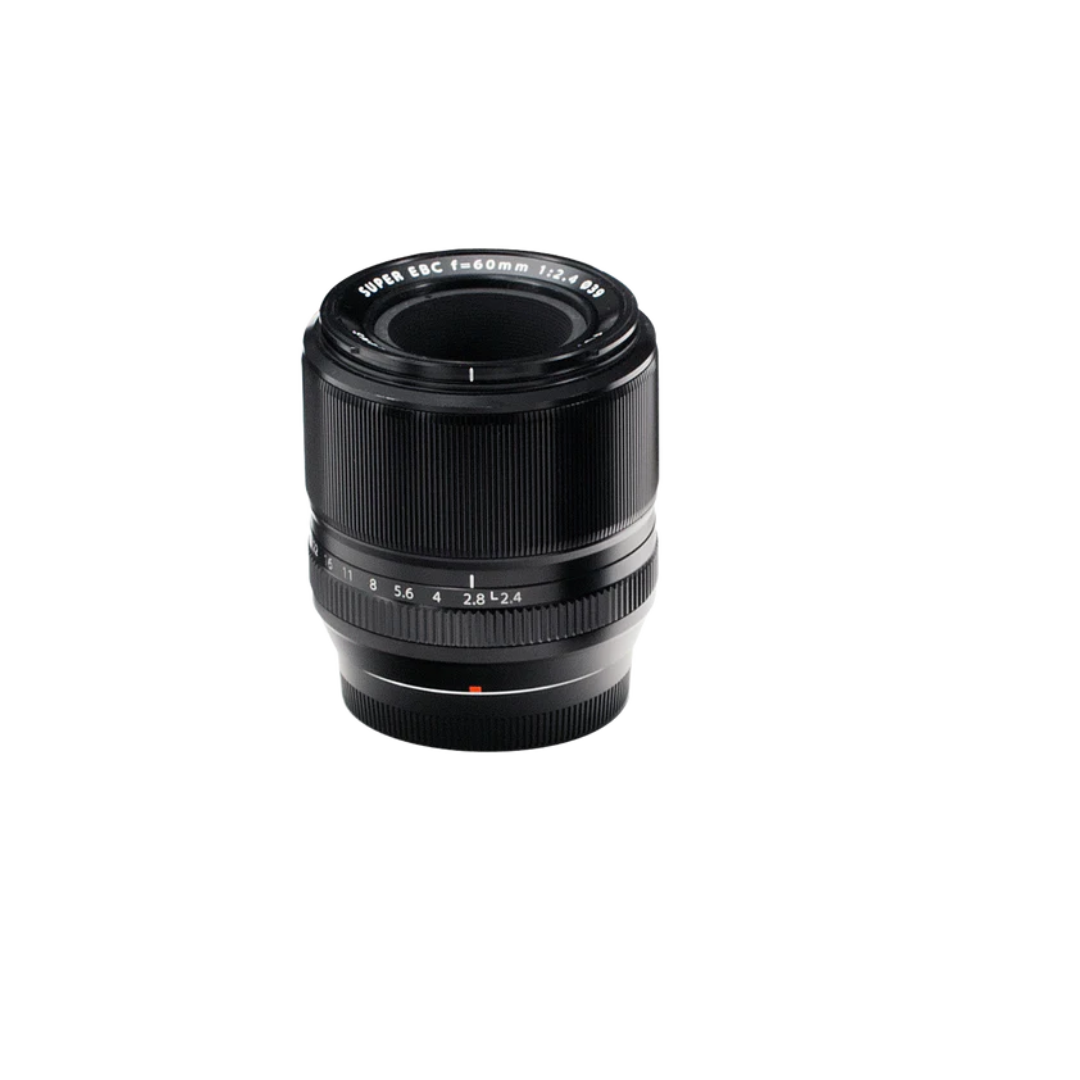
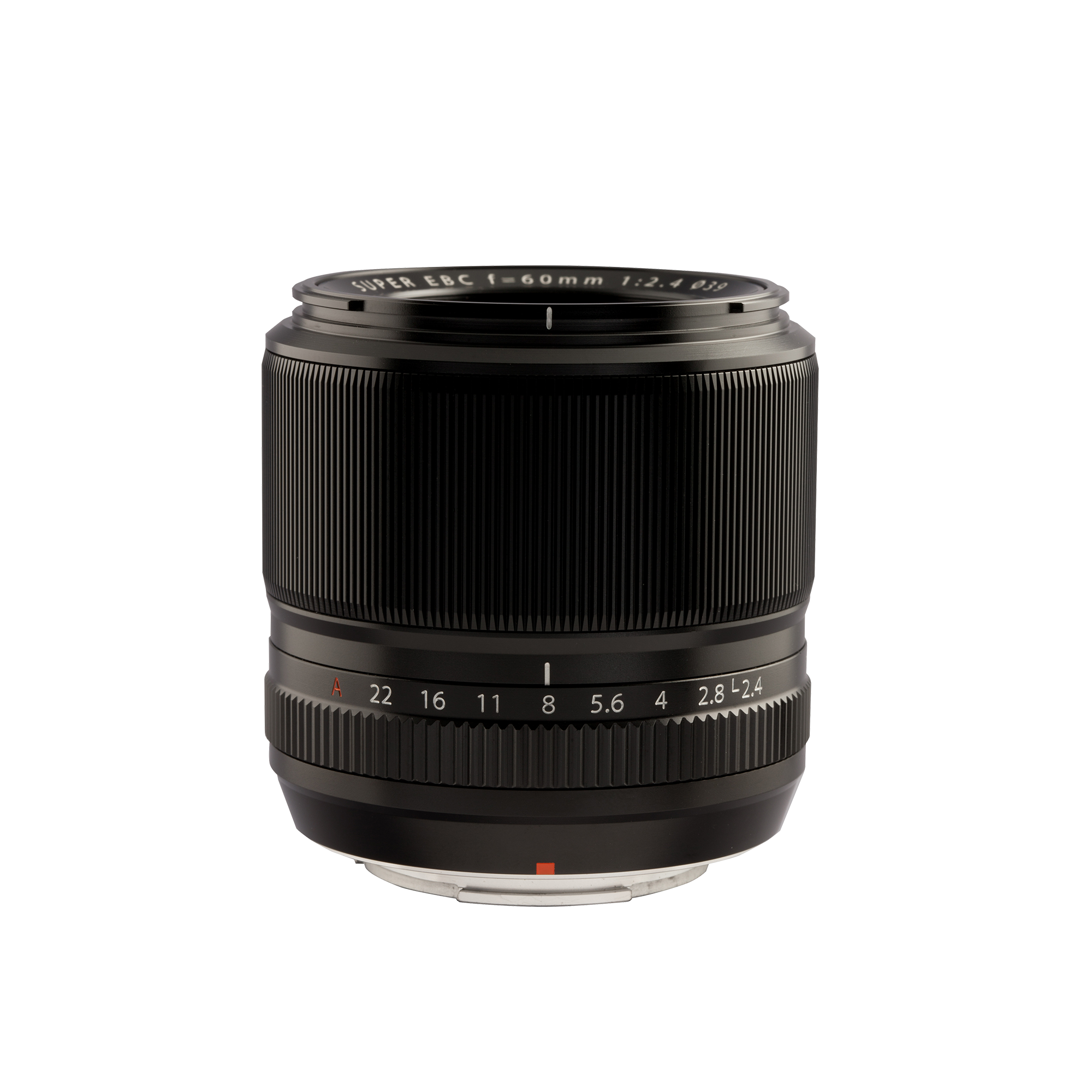
FUJIFILM XF60MMF2.4 R MACRO


Pairs well with
If you have any questions, you are always welcome to contact us. We'll get back to you as soon as possible, within 24 hours on weekdays.
-
Information
Share contact information, store details, and brand content with your customers.
-
Shipping Information
Use this text to answer questions in as much detail as possible for your customers.
-
Customer Support
Use this text to answer questions in as much detail as possible for your customers.
Medium Telephoto Macro Lens
Specs
Description
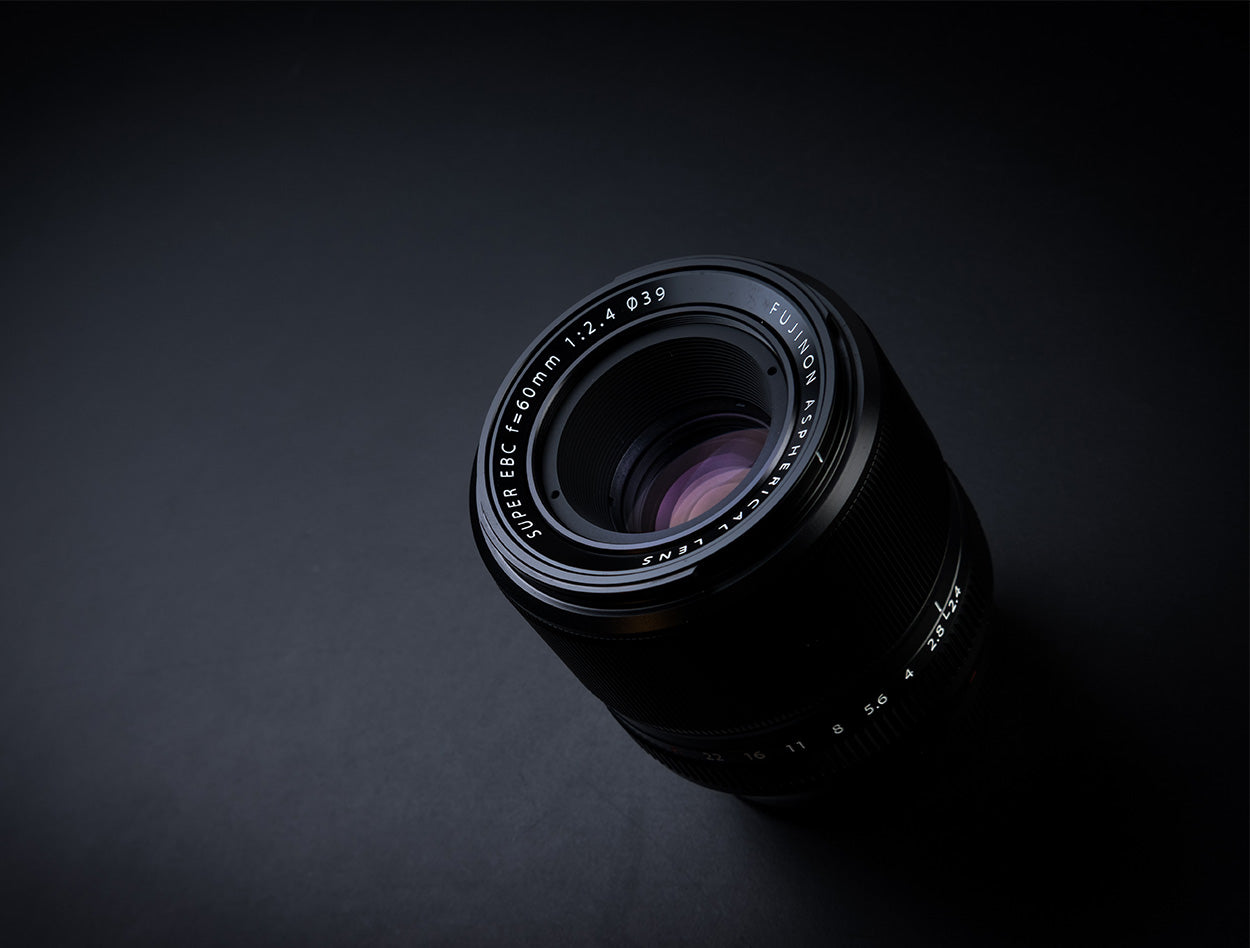
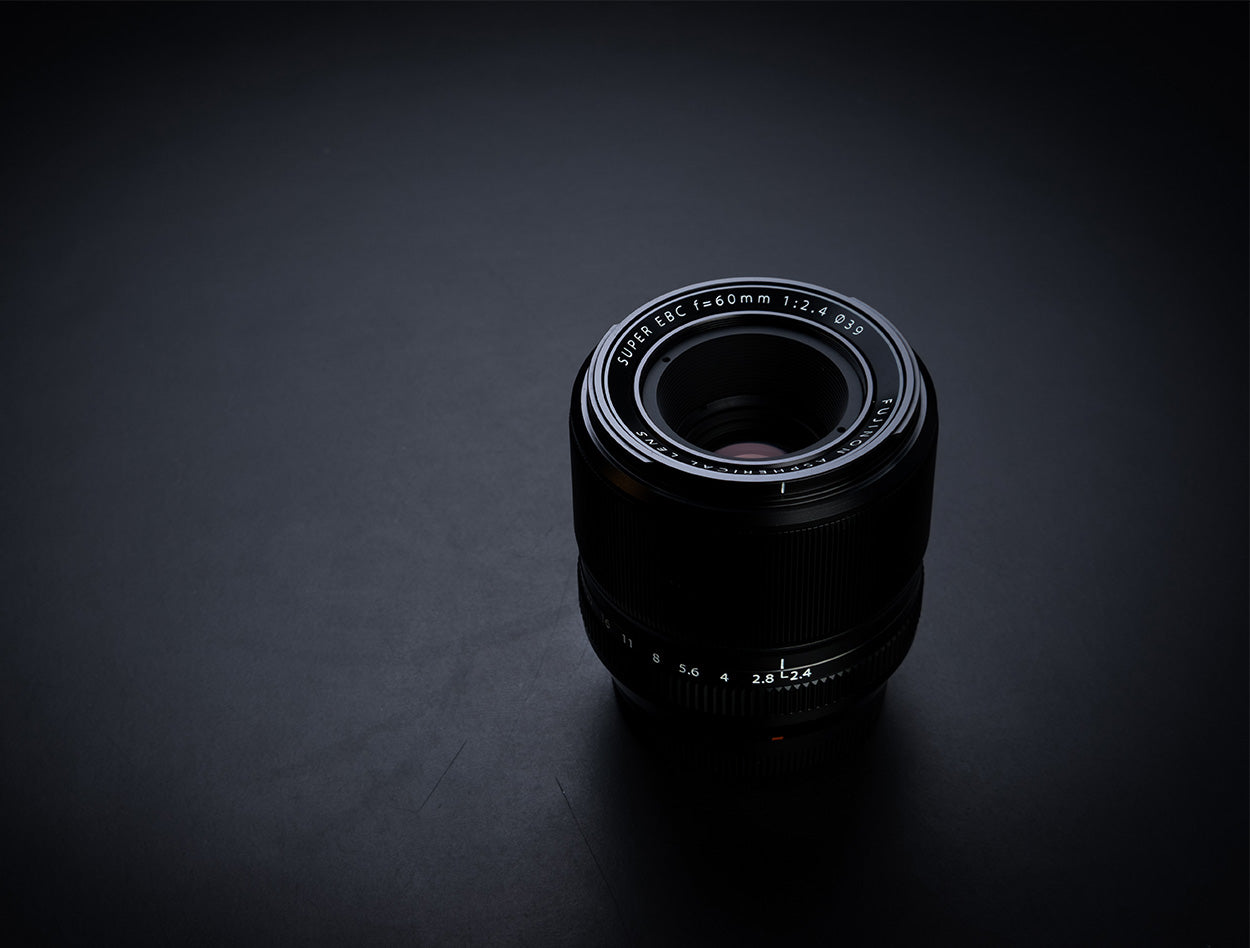
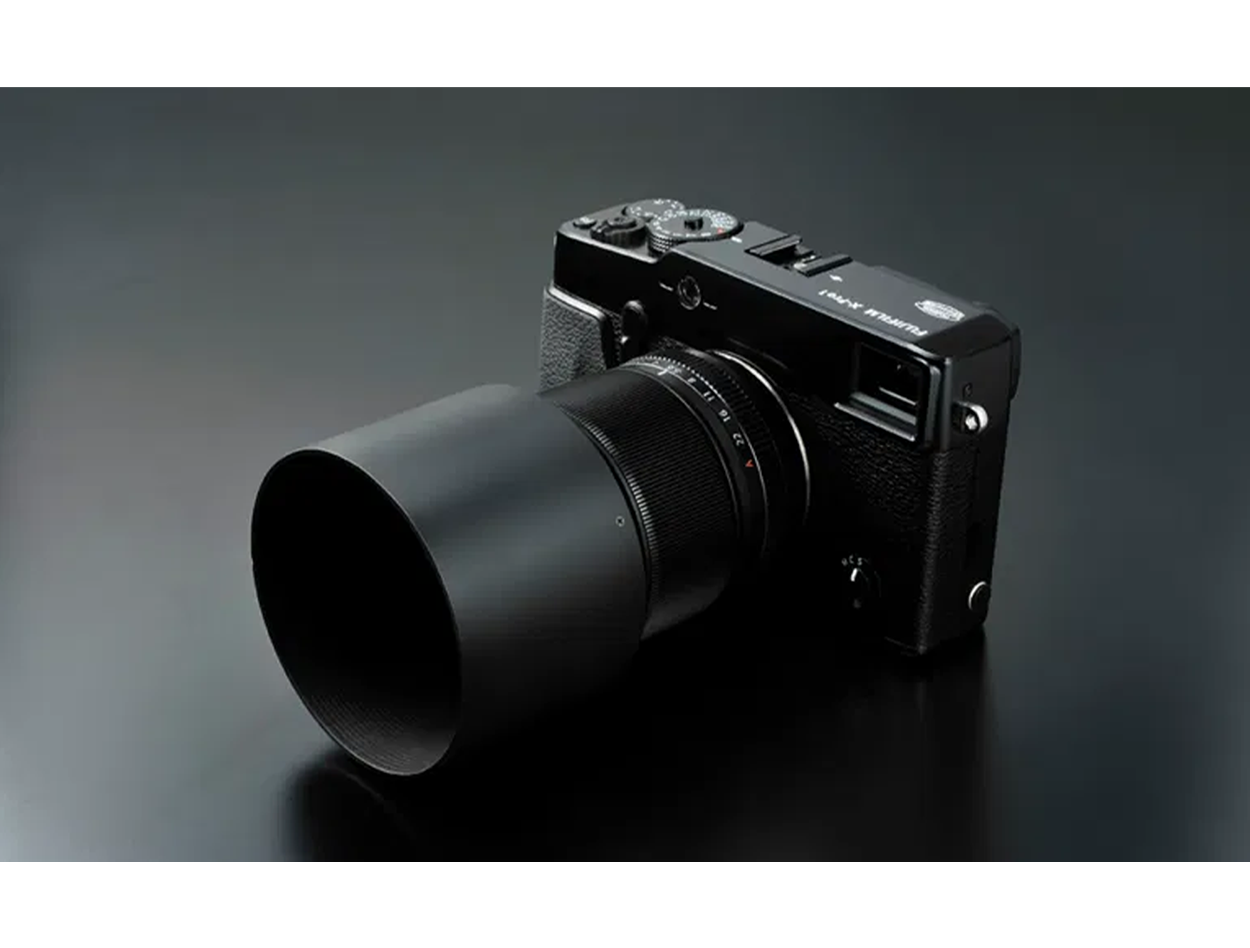
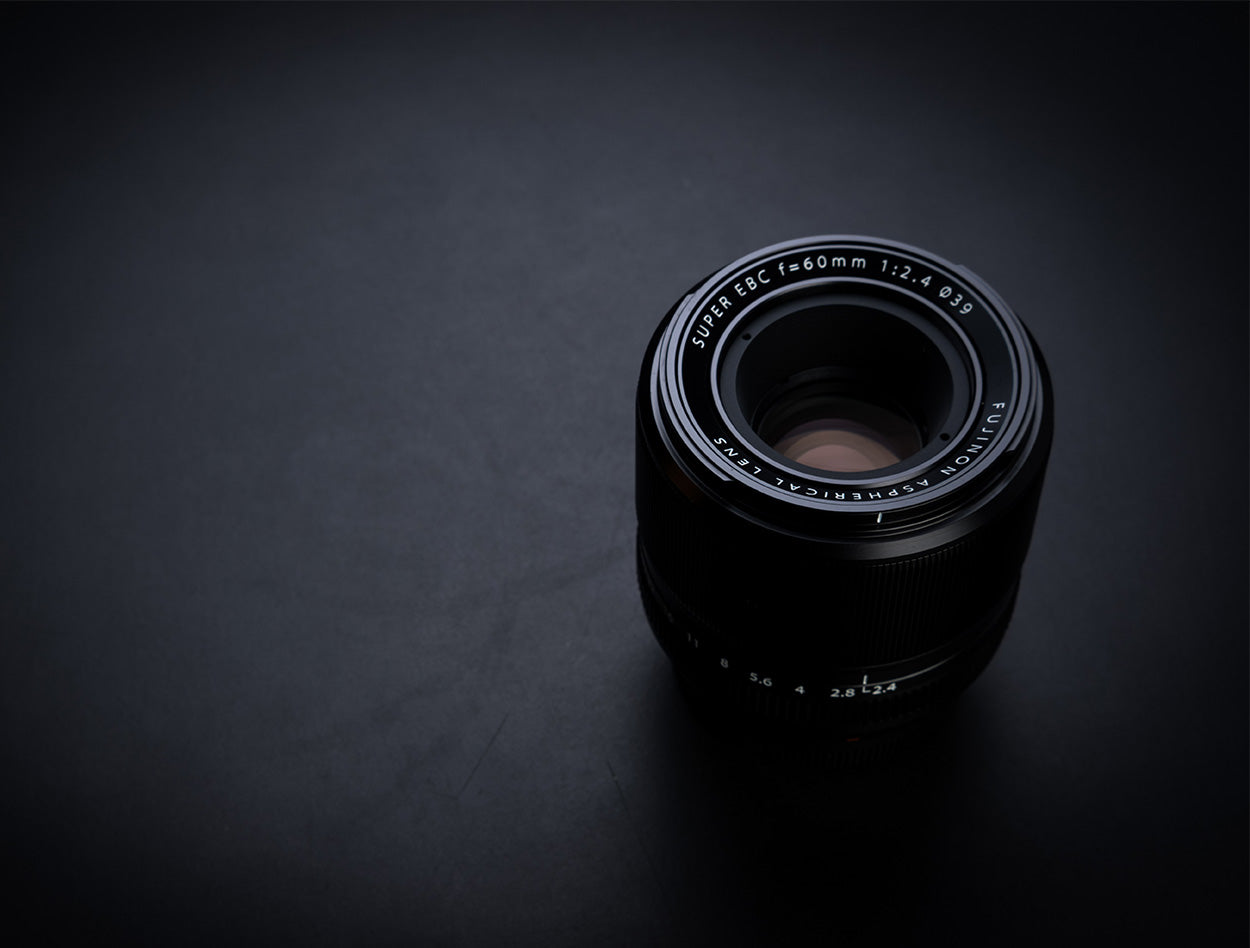
This medium telephoto lens produces outstanding macro images. The use of one aspherical and one extra-low dispersion element effectively controls various aberrations, such as field curvature and chromatic aberration, plus all the lens groups are shifted together during focusing to achieve the highest level of sharpness in the X Series line up. As well as being perfect for close-ups, it can also be used for many other medium telephoto applications, with the F2.4 maximum aperture delivering smooth bokeh.
This is a mid-telephoto lens with a bright aperture of F2.4 despite its compact size.
It uses a glass-molded aspheric lens at the 7th element to prevent field curvature.
and places an ED (extra-low dispersion) glass lens at the 6th element to contain chromatic aberration.
The lens is ideal for portraiture because of its beautiful blur and high-definition description.
At the minimum working distance of 26.7cm, the lens delivers the maximum magnification of 0.5x for macro photography.
Specification
- Model number - XF60mmF2.4 R Macro
- Release date - February 18, 2012
- Lens configuration - 10 elements in 8 groups (1 aspherical lens, 1 anomalous dispersion lens)
- Focal length - f = 60mm (35mm equivalent: 91mm)
- Angle of view - 26.6°
- Maximum aperture ratio (open aperture) - F2.4
- Minimum aperture - F22
- Aperture format - Number of blades: 9 (circular aperture), Step: 1/3 step (20 steps in total)
- Shortest shooting distance - Standard: 0.6m – ∞ / Macro: 26.7cm – 2.0m
- Maximum shooting magnification - 0.5 times
- External dimensions - Ø64.1 mm x 63.6 mm (from the tip to the mount reference surface)
- Mass - Approximately 215g (excluding lens cap and hood)
- Filter size - Ø39mm
Origin & Manufacturer
- Country of Origin Thailand
- Name of Manufacturer Fujifilm Corporation
- Address of Manufacturer 26-30, Nishiazabu, 2- Chome, Minato-Ku, Tokyo - 1068620, Japan
- Name & Address of Importer FUJIFILM India Private Limited Business Centre Office No. 521, Level V, Caddie Commercial Tower, Hospitality District Aerocity, IGI Airport, New Delhi - 110037
Included in the Box

Quick Start Guide

Lens

Lens hood

Lens Wrapping Cloth


FAQs
Please read our FAQs page to find out more.
Which Fujifilm camera is best suited for beginners or casual photographers?
The X-T30 III is ideal for classic manual dials and portability, while the X-S20 offers a modern DSLR-style grip with built-in stabilization. For pure point-and-shoot simplicity with a fixed lens, look at the X100VI.
What are Film Simulation modes and how do they work?
Film Simulations are in-camera color profiles that replicate classic photographic film stocks (like Velvia or Across). They adjust contrast, skin tones, and grain directly in-camera to deliver stylized, production-ready JPEGs without photo editing.
Can Fujifilm cameras be used for professional video production?
Yes. Advanced models like the X-H2S, X-H2, and X-T5 record up to 8K 30pand 6.2K 30p Open Gate, 4K 120p & FHD 240p (HFR) resolution, support Apple ProRes 4:2:2 10Bit, offer F-Log2 & F-Log2C profiles for maximum dynamic range, color space and feature full-size HDMI ports for external monitors.
Are Fujifilm lenses interchangeable across different models?
Lenses are interchangeable within the same system mount:
- X-Mount aka XF Lenses: Fits all interchangeable APS-C X-Series bodies.
- G-Mount aka GF Lenses: Exclusive to GFX Medium Format bodies.
- Fixed Lenses: Models like the X100 series feature permanently attached prime lenses.
How do I connect my Fujifilm camera to a smartphone or computer for transferring photos and remote control?
- Smartphone: Connect via Bluetooth/Wi-Fi using the FUJIFILM X App for wireless transfer and live remote control, or plug in directly via USB-C.
- Computer: Transfer files using an SD card reader or USB-C cable.
- XRaw Studio: FUJIFILM X RAW STUDIO and camera via USB cable, the processor in the camera will be used to process RAW files.
What is the difference between the Fujifilm X Series and GFX?
The X Series uses an APS-C sensor for everyday to professional photography, while the GFX System uses a much larger medium-format sensor built for high-resolution studio and landscape work.
Are Fujifilm cameras mirrorless?
Yes. Fujifilm's entire current lineup, including the X Series, GFX System and fixed-lens models, is mirrorless.
Which Fujifilm camera is best for beginners?
An entry-level X Series body with a kit lens is generally the easiest starting point, offering simple controls with room to grow into manual settings.